Generate Personalized Tour Itineraries via Email with GPT-4o and Pinecone


Last edited 206 days ago
🏖️ AI-Based Tour Itineraries via Email Using OpenAI & Pinecone Vector Search
Overview
This workflow automates the process of handling new tour package requests received via email, analyzes the request, and provides personalized tour package recommendations using AI and a vector database. It’s designed to streamline customer interactions and deliver quick, relevant responses.
Precondition
- Create a Embedded Tour Package Database (refer to the link below):
Pinecone Database setup - Register and create API Keys for OpenAI, Pinecone Database.
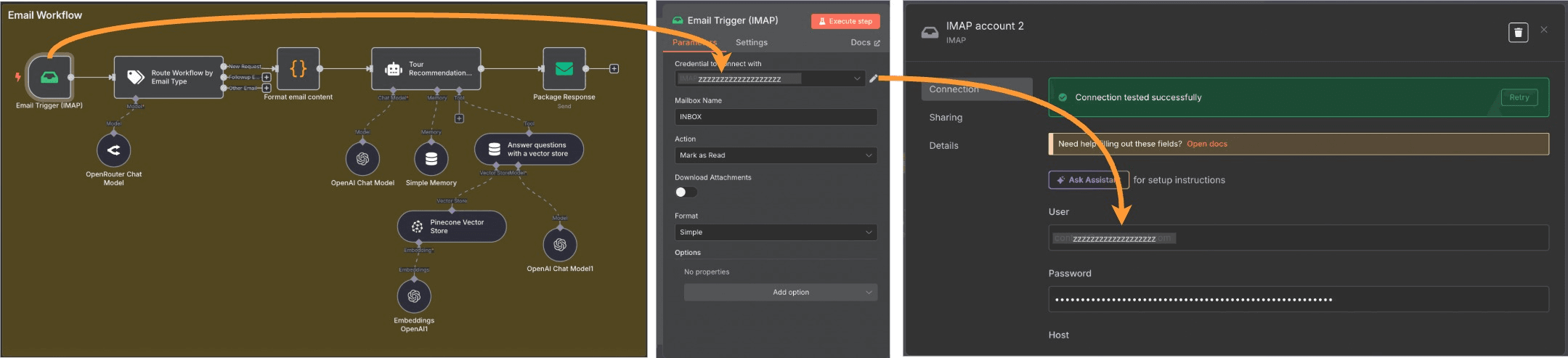
- Copy Mail Credentials to access Email Inbox from n8n node
This workflow automates the process of extracting tour information from PDF files stored in a Google Drive folder, processes and vectorizes the extracted data, and stores it in a Pinecone vector database for efficient querying. This is especially useful for building AI-powered search or recommendation systems for travel packages.
🛠️ Tools & Nodes Used
Email Trigger (IMAP): Monitors the inbox for new tour package requests.
Text Classifier: Categorizes incoming emails (e.g., New Request, Follow-up, Other).
Code Node: Extracts and structures relevant data from the email (subject, sender, content, etc.).
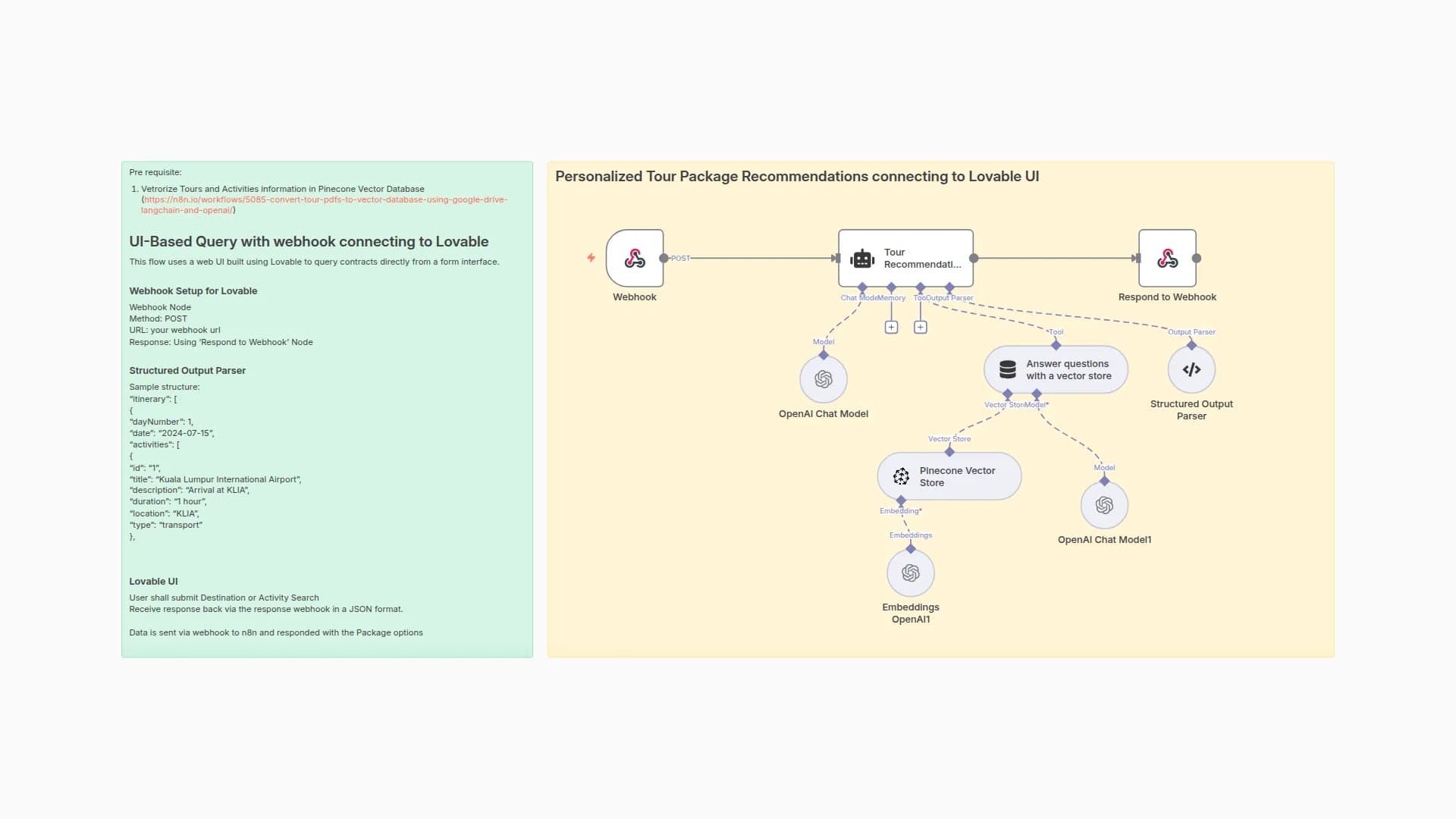
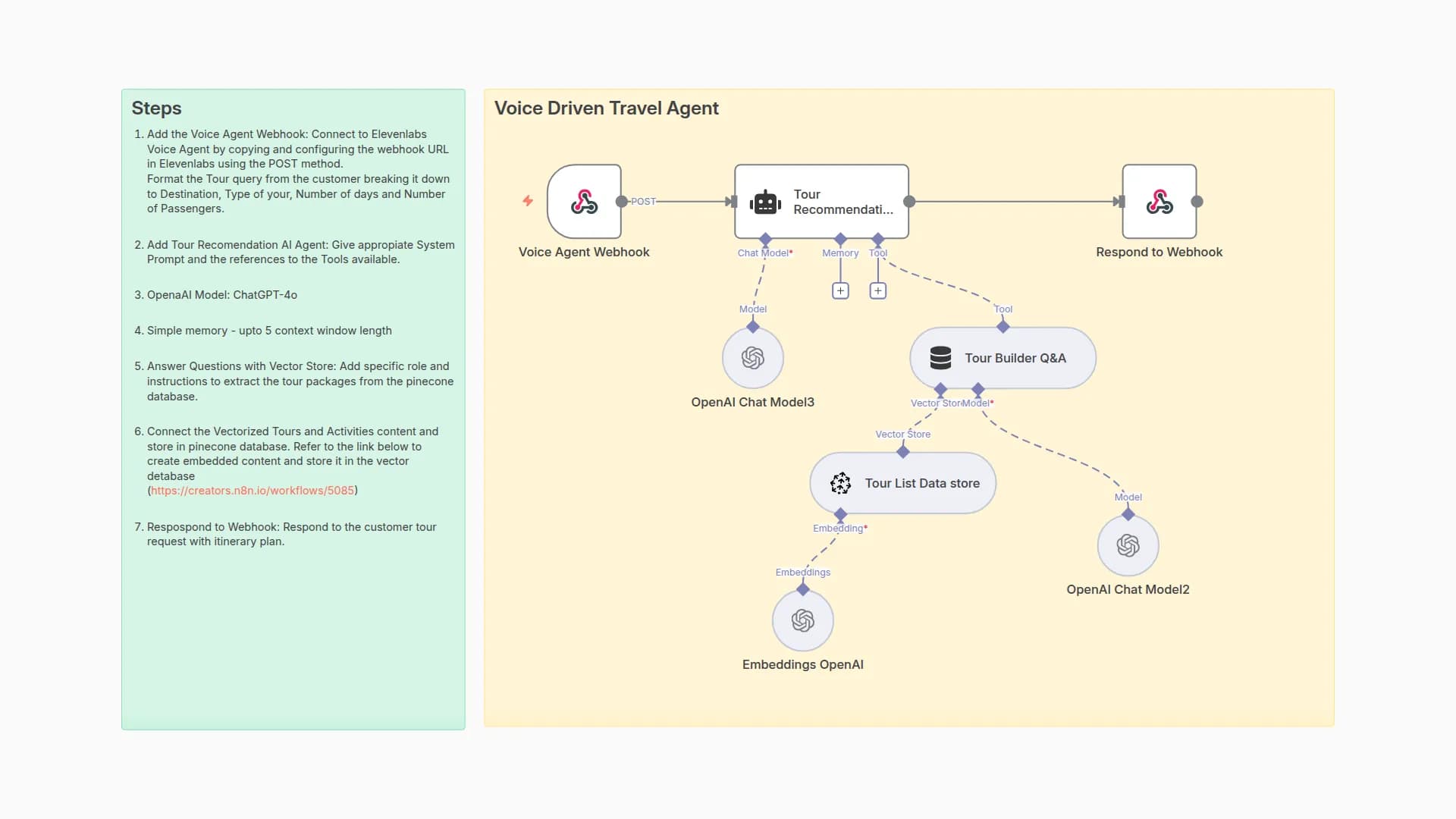
Tour Recommendation AI Agent: An AI agent that interprets the request and formulates a prompt for package recommendations.
OpenAI & OpenRouter Chat Models: Used for natural language understanding and generating responses.
Simple Memory: Maintains context for ongoing conversations.
Pinecone Vector Store: Stores and retrieves tour packages using semantic search.
Embeddings (OpenAI): Converts text data into vector embeddings for similarity search.
Answer Questions with a Vector Store: Retrieves the most relevant packages from Pinecone.
Send Email: Sends the AI-generated recommendations back to the customer.
🔄 Process & Flow
Email Reception: The workflow starts with the Email Trigger (IMAP) node, which listens for new emails in the inbox.
Classification: The Text Classifier node determines if the email is a new tour package request.
Data Extraction: The Code node parses the email, extracting key details like sender, subject, and content.
AI Agent Processing: The Tour Recommendation AI Agent receives the structured request and crafts a prompt for package recommendations.
Vector Search: The agent queries the Pinecone Vector Store, which holds previously created tour packages, using OpenAI embeddings for semantic matching.
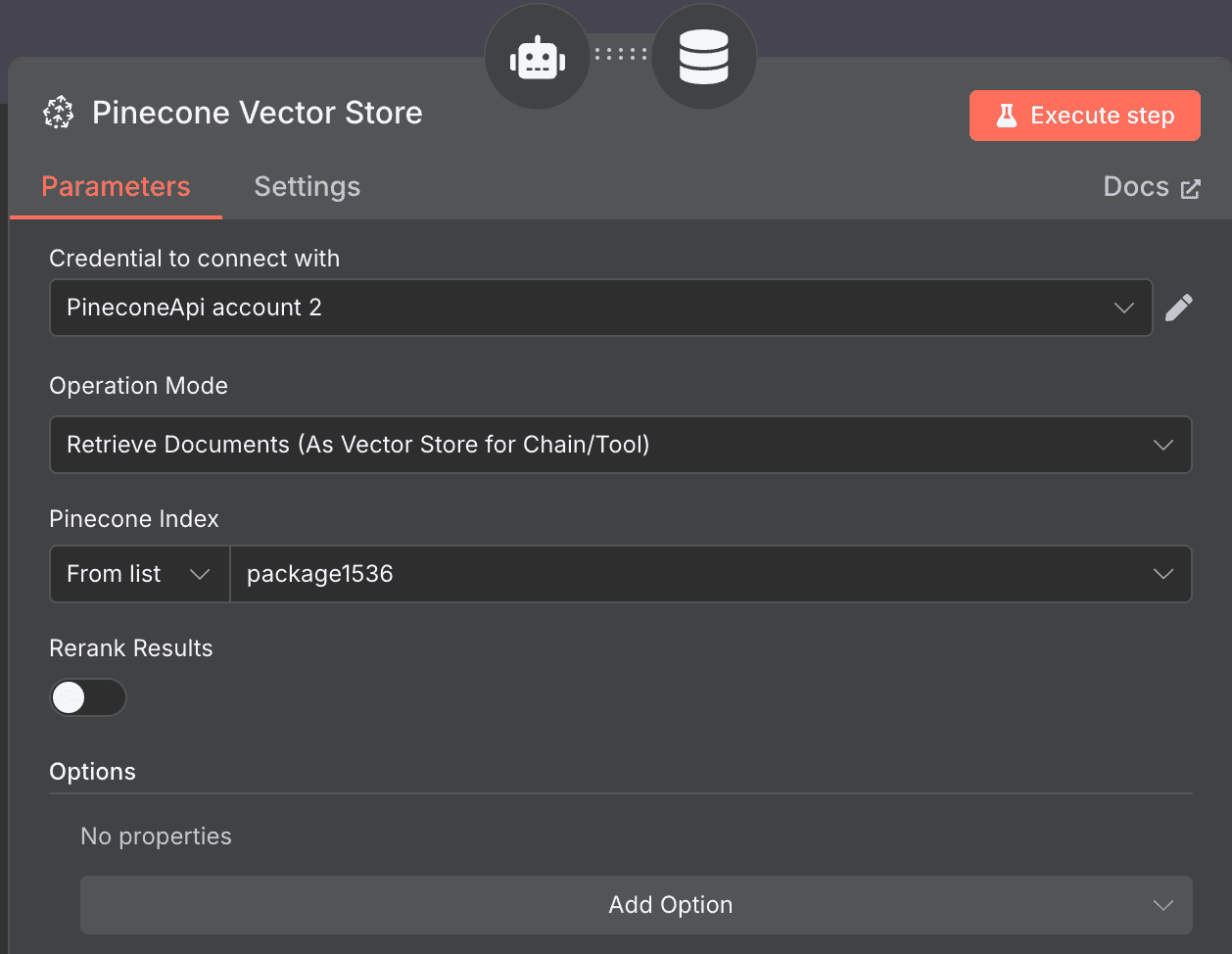
Recommendation Generation: The AI agent selects the top 3 most relevant packages and generates a friendly, personalized response.
Response Delivery: The Send Email node sends the recommendations back to the customer.
🚀 Recommendations & Improvements for Next Version
Error Handling: Add error handling nodes to manage failed email parsing or AI response issues.
Logging & Analytics: Integrate logging to track requests, recommendations, and customer responses for continuous improvement.
Personalization: Enhance the AI agent to consider customer history or preferences for even more tailored recommendations.
Multi-language Support: Add language detection and translation for international customers.
Feedback Loop: Include a mechanism for customers to rate recommendations, feeding this data back into the system for improved future suggestions.
Attachment Handling: Enable the workflow to process attachments (e.g., customer itineraries or preferences).
Scalability: Consider batching or queueing requests if email volume increases.
💡 Conclusion
This workflow demonstrates how n8n, combined with AI and vector databases, can automate and personalize customer service in the travel industry. With a few enhancements, it can become even more robust and customer-centric!
You may also like

New to n8n?
Need help building new n8n workflows? Process automation for you or your company will save you time and money, and it's completely free!